
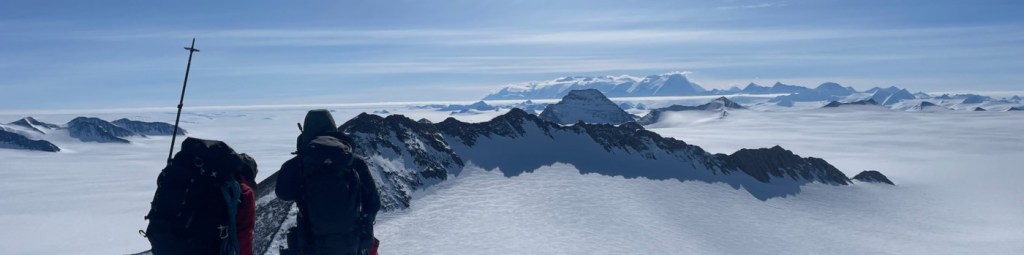
This past October, a friend and colleague of 15+ years reached out to me with an unconventional and unexpected proposition: he had been arranging a research expedition to a remote and inhospitable expanse of mountains in the middle of the Antarctic continent, and a critical team member had just become unavailable for the trip. He asked if I wanted to join the team. Departure was set for the day after Christmas, two months away. We’d be gone for a month. It would be cold. Windy. Hard. Unfamiliar. Uncomfortable.
I said yes immediately. Actually, I said “let me check with Nicole to make sure I can upend our plans for Christmas and leave her high and dry with our kids for weeks at a time during a critical time for her business.” But my friend had invited me on this trip as much for my own reputation for being willing to say yes as much as for the support he knows my wife has for my schemes and ventures. “You absolutely have to go. We’ll make it work” was about all she got out before I bear hugged her, and the plan was set.
The expedition that followed saw weeks of hardship, frustrations, delays, re-plans, and logistical scrambles, but also intense accomplishment, exploration, new bonds, and growth. This blog isn’t the place for sea stories, but suffice it to say that the expedition was a once-in-a-lifetime journey that I am grateful for. As I’ve been collecting my thoughts and observations in the weeks since returning home, I want to share a few important lessons I internalized along the way:
Being willing to say “yes” is half the battle
In work as in personal pursuits, sometimes simply being willing to says yes can open doors. Many, many people are unwilling or unable to say yes due to a multitude of reasons – some beyond and some within their control – , which means if you can build for yourself a “yes-first” mindset to new opportunities, you’ll find that you’re in a small segment of explorers and adventurers in this world.
Saying yes, however, isn’t necessarily so simple. Keeping an open mind to new and unfamiliar experiences, being willing to accept new challenges, dealing well with uncertainty, and having a baseline level of capability and preparedness are all prerequisites for saying yes.
Growth comes through discomfort
Climbing a knife-edge ridge with sheer drops on either side? Uncomfortable. Wearing fewer layers than is optimal for comfort and warmth so you stay a little bit cold to avoid sweating while climbing/exerting? Uncomfortable. Relying only on what you can carry on your back for survival in an unforgiving and unpredictable polar environment? Uncomfortable. Even in modern times with comfortable/light equipment, sophisticated dehydrated food sources, and emergency communications gear, virtually every element of exploring in a polar environment is extremely uncomfortable. To thrive in such a place for very long requires a high degree of comfort with…being uncomfortable.
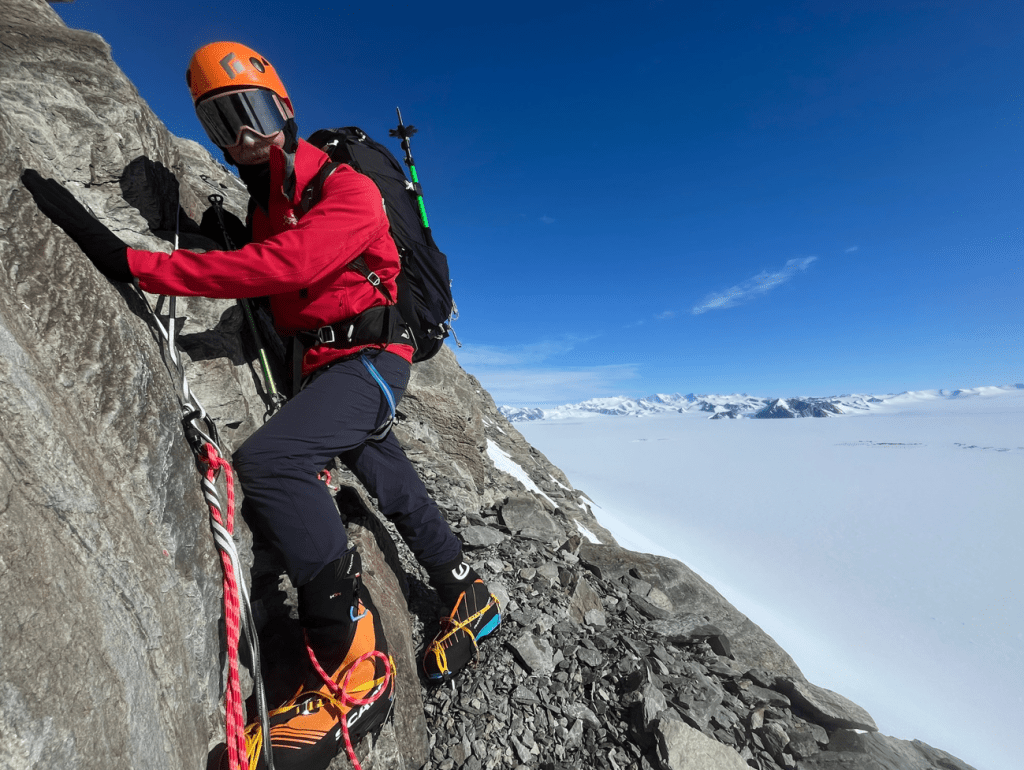
Being uncomfortable teaches us lessons, pure and simple. Discomfort teaches us to find new methods of problem solving. Sometimes it teaches us that we can accomplish something we didn’t think we were capable of. Other times it teaches us that our risk calculus is off after we’ve pushed ourselves beyond our own capabilities (more on that below). At one point our 4-man climbing group was discussing life at home and how we stay engaged in climbing and traveling amid work, family, and other commitments. Our expedition guide, among the most accomplished mountain guides in the world, explained that he had recently bought his first couch at the age of 45. He was dissatisfied with it because he felt that it was making him “soft”, since he has since noticed that for the small part of the year that he is home in his small town in the Alaskan wilderness all he wants to do is sit on his couch. When a person becomes so accustomed to growth through discomfort, the thought of slowing down and being comfortable brings with it fears of stagnation, complacency, and laziness.
In business, as in life, growth occurs through discomfort. Launching a new product, entering a new market, hiring or expanding a team are all inherently uncomfortable acts, since humans typically associate comfort with the status quo. But understanding and embracing discomfort as a business strategy helps build an organizational culture of measured risk taking, adaptability, and growth.
Who you were once is not necessarily who you are now
When I said yes to my friend’s invitation, I did so knowing that I had spent the majority of my 20s carrying heavy loads over rough terrain in austere environments, and that I was capable of enduring. But as I trained, tested my gear, and prepared mentally for the rigors of the expedition, I realized that I had changed in the 8 years since I had separated from the Marines and focused on a career in business and technology. I didn’t train and prepare for the everyday challenge that an expedition of this nature would present. I had to accept that I hadn’t lived that life for some time, and that I’d need to rediscover some elements of it.
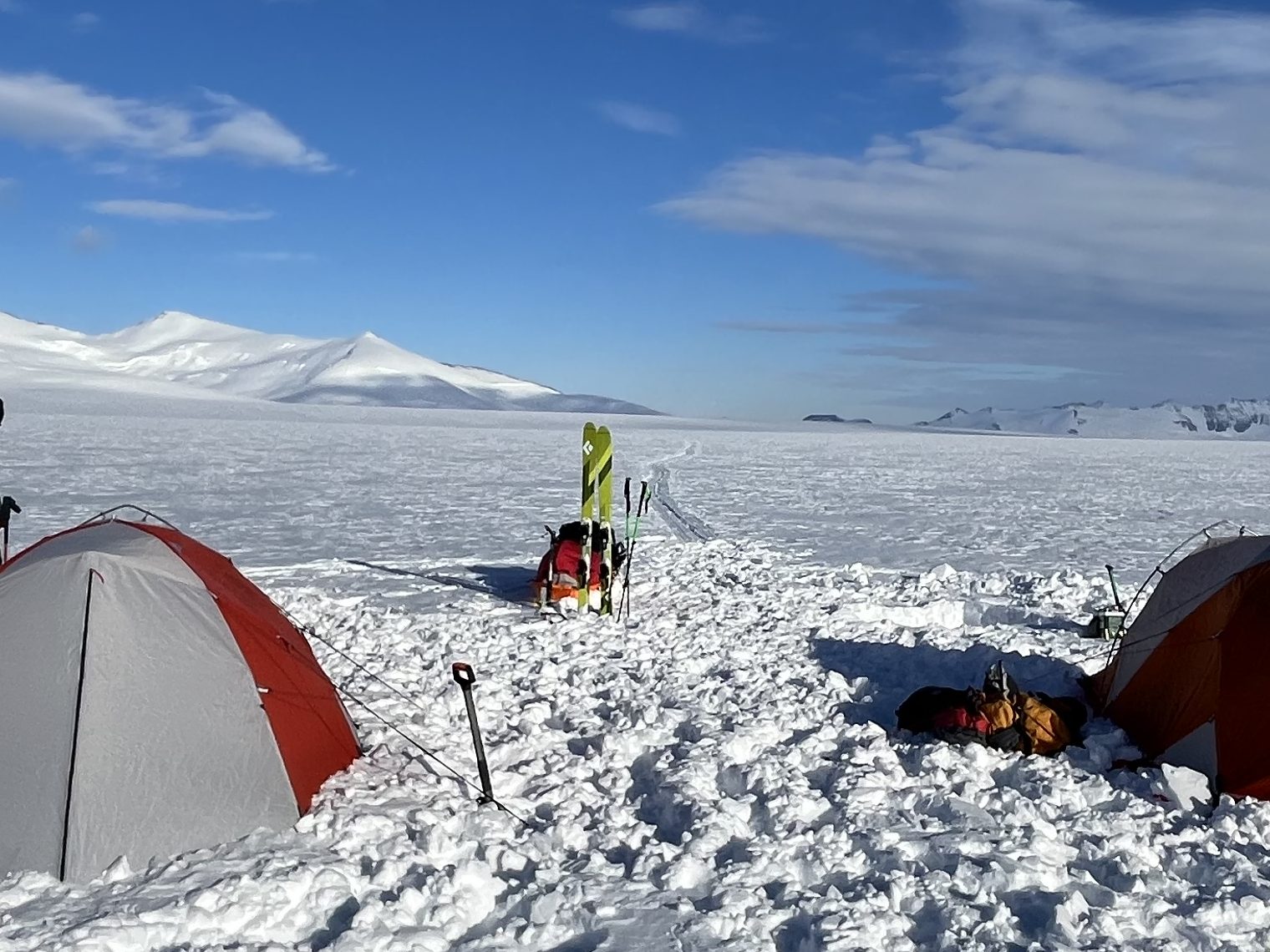
Certain endeavors have a way of humbling you regardless of your past experience or penchant for discomfort. Taking care of bodily necessities in a wag bag in the open on an Antarctic glacier in -10 to -20 wind chill is one of those endeavors. I’m not sure there are many other things that reinforce so decisively that, even though you were once comfortable living a spartan existence at one point, you have now become accustomed to the comforts and trappings of civilized life.
Understanding that you need to keep reproving yourself, even if it’s only to yourself, is a key to growth in this life. You won’t always succeed at something because you’ve succeeded at it in the past, and many organizations will rightly only value you for what you can do in the future, not what you have done in the past. It’s vital to clearly communicate the value you can add to any organization based on your skills and experience, but also your vision and commitment to success in the role you are looking to fill moving forward. Once you’re entrusted with a role in an organization, business, or community group, always remember that you are only as good as the value you can provide going forward, and that you need to keep proving yourself day in and day out to maintain that value.
Embrace FITFO…
Sir Ernest Shackleton, the famous British Antarctic explorer, once explained the traits that he most prized in the expeditioners under his charge:
The quality I look for most is optimism: especially optimism in the face of reverses and apparent defeat. Optimism is true moral courage.
To be brave cheerily, to be patient with a glad heart, to stand the agonies of thirst with laughter and song, to walk beside death for months and never be sad – that’s the spirit that makes courage worth having.
As an admirer of the so-called heroic age of Antarctic exploration, I am always struck at how relatively unskilled some of the most capable early crew members of the polar expeditions were. On its face, this should seem obvious, after all it would be impossible to truly train for Antarctic conditions while living in early 20th century Britain. As such, the earliest expedition leaders – Amundsen, Ross, Scott, Shackleton – selected men who were proven seamen, in order that they would successfully make the voyage to the continent, and who possessed an ability to adapt and “upskill” to endure, survive, and thrive in impossibly difficult conditions. They built up their fitness and cold endurance, learned best practices for using and maintaining their gear, rebuilt and retrofit their sleds and tents, and trained their dog teams only after arriving on the Antarctic continent. It would be impossible to do otherwise, and so an ability to learn and master new skills on the job was a prized attribute in expedition members.
Many organizations today look for candidates who “tick every box”, or who in other words already have all of the required skillsets for the role they are hiring for. This approach, however tempting it may be to a company looking to minimize the risk of a “bad hire” or “skills mismatch”, ignores the importance of a team member’s ability to “figure it [the ****] out”, aka FITFO. Finding a new hire who is willing and able to learn, adjust, and immerse themselves in uncomfortable scenarios to grow is vital if organizations want to build teams for today’s dynamic and competitive environment.
…But ignore your limitations at your own risk
Mihaly Csikszentmihalyi identified and popularized the psychological concept of “flow“, what we would colloquially call being “in the zone.” His idea held that a person is most effective when operating in an environment where skill and challenge are well matched. A skilled person who is not challenged is bored, while an unskilled person faced with a high degree of challenge in that area will become stressed and overwhelmed quickly.

Contemporary observers of this phenomenon have posited that the ideal circumstances for finding flow exist where challenge slightly exceeds skill, i.e. where a person is effectively leveraging their existing skill to accomplish a task but where their existing skill is not entirely sufficient to complete the task, thereby requiring that person to grow and learn to fully succeed at that task.
As a relatively inexperienced mountaineer making first ascents in the most remote place on the surface of the Earth, this meant that I had to be aware of my own limitations and speak up when I felt that a climb was well beyond my skillset. To ignore this principle would be to put myself and my team in unnecessary danger, and would not lead to personal or technical growth, but rather undue stress and risk.
In a professional sense, this means finding work that challenges, but does not overextend. It is incumbent on both the employer and the employee to build this scenario by matching role to skills, but also in building an environment where candor is king. If team members can’t advocate for the conditions that get them into a “flow” state, they’ll wind up either overextended and burned out or they’ll quiet quit, disengaged and disinterested. Either way, productivity and growth are casualties.
“Dress to be invited” doesn’t just apply to business
meetings
Many of us are familiar with the adage that we should “dress to be invited”. The boss is surveying the office for someone who can accompany them to an executive meeting because another team member can’t make it. The catch? The function requires a suit and tie, but the normal office attire is only business casual. Fortunately for one enterprising team member, they always keep a coat and tie on hand and so they’re picked to accompany the boss, resulting in bonus facetime with the boss and the leadership team, and they’re promoted ahead of their peers all because they were smart enough to “dress to be invited.”
I’m as much a fan of casual office attire as the next person, so fortunately for me dressing to be invited doesn’t just mean keeping a suit and lint roller in your trunk. It also means learning how your broader industry and field operates. It means understanding your organization’s goals and mission, even if you’re not a decision-maker in it. It means building a reputation for being someone who says yes. It means observing your boss and learning how they do their job, and why. It means making yourself valuable outside of the confines of your current role.
In my case, having a reputation among my friends and family for maintaining my fitness, seeking out new experiences, and admittedly being a little bit nuts kept me top of mind when my friend needed to fill a last-minute spot on his Antarctic expedition. It was my version of being “dressed to be invited”. If you maintain your version of being dressed to be invited, the opportunity that that can create could find you being invited to contribute outside of your current role and you’ll grow, learn, and have opportunities that you wouldn’t have if you were only dressed for your current day-to-day.
There’s always someone out there more badass than you are. Also known as the “don’t be an arrogant jerk” principle.
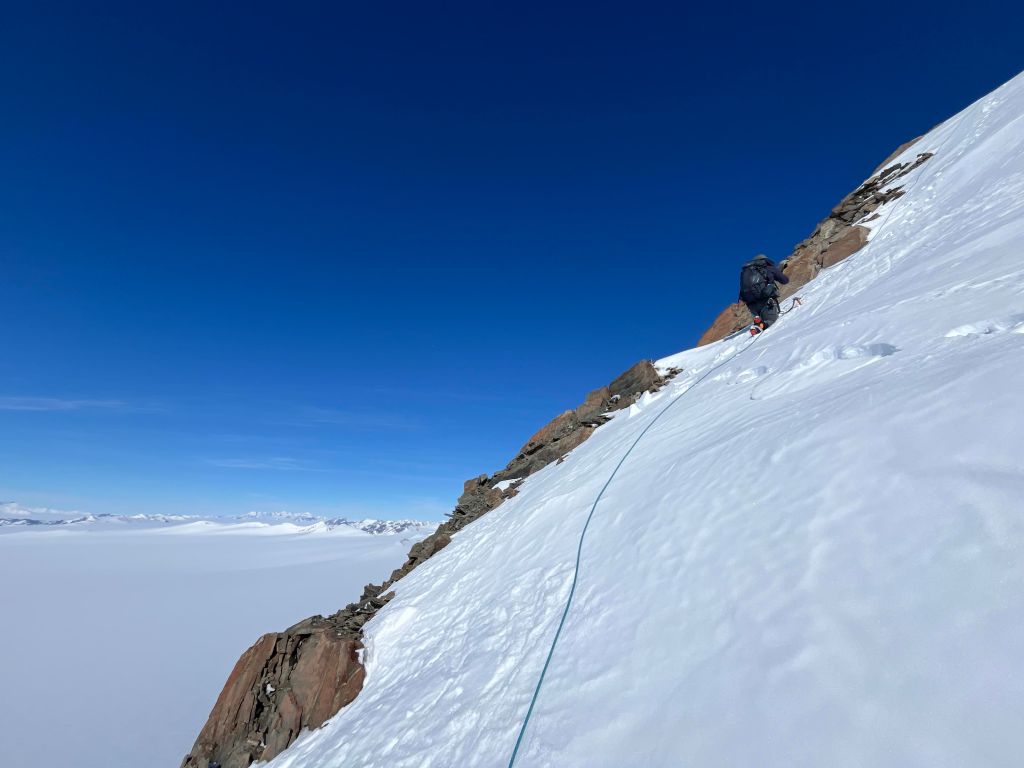
Whether you’re a Special Forces operator, the CEO of a unicorn, or sinking your axe into the slope of an unclimbed ice face at the bottom of the world, there’s someone else out there who’s done more, done it bigger, done it faster, done it better. Having the humility to seek out those who are more knowledgeable and more capable than you, and having the wisdom to listen to what they have to say and adopt their expertise into your own approach is the most critical habit to build if you’re looking to grow.
It’s an often quoted axiom that “if you find you’re the smartest person in the room, you need to find a new room.” This could be perceived as another incarnation of maintaining a certain level of discomfort, and it’s a principle that applies on the mountain as well as in the boardroom. When you stop needing to be on top of the pile in every interaction, particularly as a leader, you are free to unlock the collective knowledge of your team. No one leader has all of the answers, even in a highly hierarchical organization where leaders are bestowed with significant positional authority. Only by seeking to surround yourself with smarter, more experienced, more talented associates can you truly build an organization where the “best idea wins”. Any team that can accomplish this culture will have a decisive advantage over other less flexible organizations which are more unilaterally deferential to their positional leaders.
Here is a non-comprehensive list of people I learned something from on this trip, because I was willing to listen:
- Ryan
- Will
- Eli
- The Russian mountain guide with a perspective (elicited after a few too many beers) on the war in Ukraine
- The girl at the electronics store in Punta Arenas who explained through hand signals that if I bought that adaptor, my phone would certainly explode
- The American mountaineer who sought to climb Antarctica’s highest peak because she “had $50k burning a hole in her pocket”
- The Irish travel blogger who had just completed his goal of being the first recorded person to visit every country and summit each continent’s highest peak
- The French dishwasher and kitchen assistant who took the Antarctic contract after living abroad for several years because she thought it would be exciting
- The snow cat driver following roads on the glacier proven in prior years with ground-penetrating radar
- The Iceland air flight attendant whose seniority in the airline paved the way for her to serve a rotation ferrying adventurers to Antarctica
- The base camp worker who organized and gave fantastic lectures on Antarctic history, geology, governing treaties, and the age of exploration
- The base camp worker who gave an evening presentation on her work cleaning up beach trash and debris in Alaska
- The explorer and adventurer who gave an presentation on his recent gambit to be the first person to bike from the coast to the south pole
- The Chilean-American father and his American-born son who gave me great hiking trail and restaurant district recommendations for my 12-hour layover in Santiago
- Eli again
- The Twin Otter pilot who exercised a high degree of maturity and caution in refusing to land on an unexplored glacier in an overcast zero-contrast environment, and who a week later exercised a high degree of daring and skill landing unhesitatingly on the same glacier under more favorable conditions
- Will again
- The Chinese couple visiting the south pole with their daughter
- The big mountain guide who had been “put out to pasture” by being assigned to the billionaire camp to take pampered, comfort-loving celebrities on Antarctic walkabouts
- Many, many others
 Accipiter Consulting & Contracting
Leave a comment